Container Routes to Ukraine Are Changing
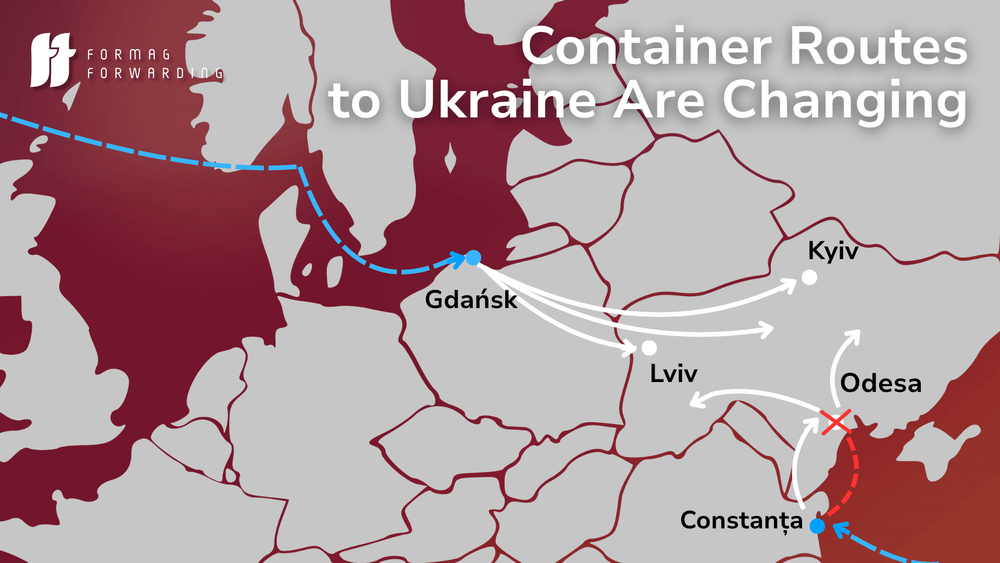
As the security situation around Ukrainian ports deteriorates, major container lines and vessel operators are reducing or restructuring their services through Ukraine’s Black Sea ports. This is already reshaping the logistics model between Ukraine and the EU.
Part of the cargo flow is being redirected through Gdańsk and Constanța, followed by the inland leg to Ukraine by road or rail.
Demand for road and rail container transport from ports in Poland, Romania and other EU countries to Ukraine is increasing. This is placing additional pressure on transport capacity and border crossings, while also affecting the availability of trucking and rail services, lead times and inland transport costs.
Further growth in cargo volumes will place even greater pressure on ports, terminals, border infrastructure and inland transport providers.
Warehousing Infrastructure
The redistribution of cargo flows is already driving increased demand for temporary storage, transshipment, consolidation and deconsolidation services in Poland and Romania.
This is particularly relevant for cargo that cannot be transported to Ukraine immediately after arriving at the port.
Lead Times and Costs
The new routing model involves additional operational stages, including the ocean leg, port handling, transit formalities, the inland leg by road or rail and, where required, warehousing.
Each additional stage affects the total cost and transit time. This makes it especially important to assess not only the ocean freight rate, but also the full end-to-end cost of delivery to the final destination.
Today’s Market Realities and the Way Forward
We already have workable solutions in place for these shipments and are reviewing our clients’ routes to identify the most efficient options based on cargo requirements, timelines, budgets and available infrastructure.