Japan–Ukraine: Logistics for Real-World Projects
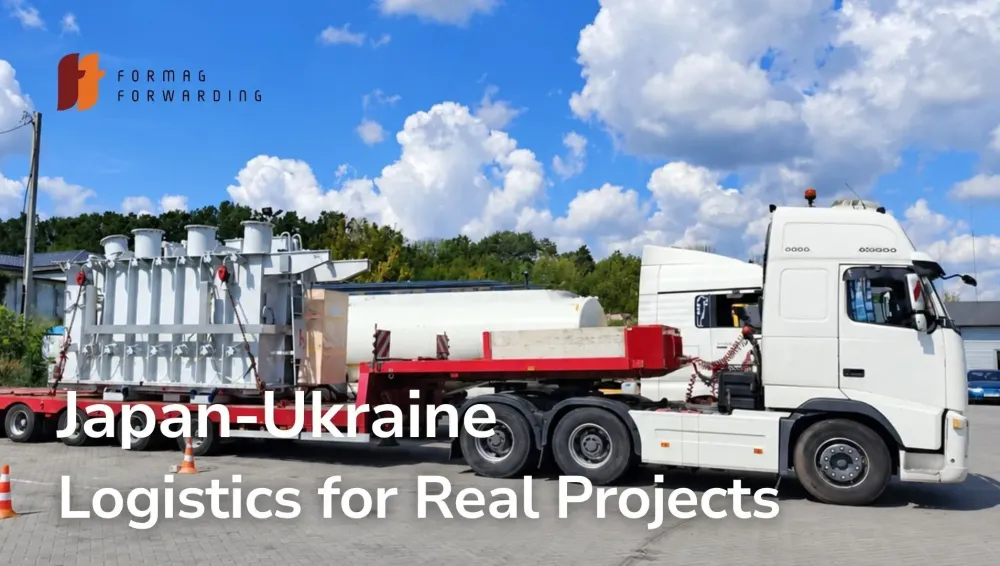
Recent engagement between Ukraine and Japan continues to highlight a growing focus on practical economic cooperation, reconstruction and private-sector participation. During a visit by a Japanese government delegation to Kyiv, the two sides discussed trade and investment, the involvement of Japanese businesses in Ukraine’s reconstruction, as well as joint projects in energy, infrastructure and industry.
For businesses, moving from agreements to actual project implementation creates a range of specific operational challenges. One of the key priorities is establishing reliable and flexible logistics between international markets and Ukraine.
From Project Planning to Physical Delivery
Infrastructure, energy and industrial projects require the movement of equipment, components, materials and other cargo, often with complex transportation requirements.
For these shipments, it is important to assess in advance:
- the most suitable entry points into Europe and Ukraine;
- available sea, road and rail routes;
- customs clearance requirements;
- transshipment and temporary storage options;
- last-mile delivery in Ukraine;
- transport requirements for project cargo, oversized cargo and critical shipments.
It is equally important to plan for situations where the original route may need to change during project execution.
One Route Is Not Always Enough
Current conditions in the region show that supply chain resilience increasingly depends on having alternatives.
Changes in Black Sea port operations are already affecting container logistics to Ukraine. Some cargo flows may be redirected through European ports, followed by road or rail transport into Ukraine. This adds more operational steps to the supply chain and requires continuous assessment of transit times, costs and available infrastructure.
For complex international projects, it is therefore important to plan not only the primary route, but also alternative delivery scenarios.
Local Execution Matters
For international companies, arranging the international leg of transportation is only part of the task. Understanding local operating conditions in Ukraine is equally important.
We help our international partners assess routes and risks, organize international transportation and customs clearance, manage project cargo movements, and arrange delivery to the final destination.
This approach is particularly important for projects where logistics is part of a broader infrastructure or production process and a delay at one stage may affect the entire project schedule.
From Cooperation to Implementation
Ukraine–Japan cooperation is increasingly moving toward specific projects. Japan has officially stated its intention to support private-sector involvement in Ukraine’s reconstruction and the development of practical joint initiatives.
Delivering these projects requires more than investment and technology. It also requires logistics that can operate in real-world conditions, adapt when routes change and ensure reliable execution on the ground.
If you are planning equipment deliveries or an international project in Ukraine, our team can help assess possible logistics scenarios and arrange delivery.